

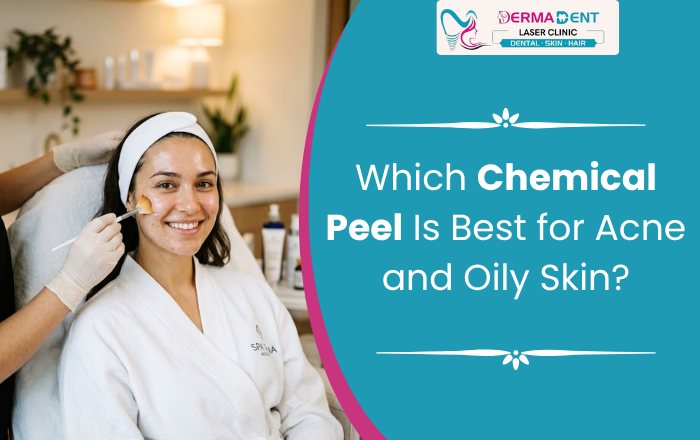
If you have oily skin, frequent acne, clogged pores, or acne marks, you may have come across chemical peels for acne. Chemical peels are commonly used in dermatology to remove excess dead skin cells, unclog pores, reduce oiliness, and improve the appearance of certain acne-related concerns.
But not every peel is suitable for every skin type. The “best” chemical peel for acne and oily skin depends on the type of acne, how sensitive your skin is, whether you have active breakouts or mainly acne marks, and your overall skin condition.
So, which chemical peel is best for acne and oily skin? In many cases, salicylic acid peels are a popular choice because salicylic acid is oil-soluble and can penetrate into clogged pores. However, other peels such as glycolic acid, mandelic acid, or combination peels may also be considered depending on the individual.
What Is a Chemical Peel?
A chemical peel is a dermatological treatment in which a carefully selected chemical solution is applied to the skin for a controlled period. It helps remove damaged or dead skin cells from the surface and encourages healthier-looking skin.
Depending on the type and strength of the peel, it may help with:
- Excess oil
- Clogged pores
- Blackheads and whiteheads
- Mild to moderate acne
- Uneven skin texture
- Post-acne dark spots
- Dull-looking skin
For acne-prone skin, the goal isn’t simply to “peel” the skin. The treatment is selected based on what is actually causing or maintaining the problem.
Which Chemical Peel Is Best for Acne and Oily Skin?
1. Salicylic Acid Peel
Salicylic acid peel is often one of the most suitable chemical peels for oily and acne-prone skin.
Salicylic acid is a beta-hydroxy acid (BHA) that is oil-soluble. This makes it particularly useful for skin with excess sebum and clogged pores.
It may help:
- Reduce excess oil
- Clear clogged pores
- Improve blackheads and whiteheads
- Reduce the appearance of acne
- Improve rough skin texture
Because acne can have different causes, a dermatologist may recommend salicylic acid alone or as part of a broader acne treatment plan.
2. Glycolic Acid Peel
Glycolic acid is an alpha-hydroxy acid (AHA) that works mainly on the skin’s surface.
A glycolic acid peel may be considered when acne is accompanied by:
- Uneven skin texture
- Dullness
- Mild pigmentation
- Post-acne marks
- Rough skin
It can be useful when the main concern has shifted from active acne to the marks and uneven texture left behind.
However, glycolic acid may not always be the first choice for very oily, congested skin.
3. Mandelic Acid Peel
Mandelic acid is another AHA that is often considered for acne-prone skin, particularly when the skin is sensitive.
Its larger molecular structure means it generally penetrates the skin more slowly than glycolic acid. Depending on the formulation, this can make mandelic acid a useful option for people who may not tolerate stronger acids well.
It may be considered for:
- Mild acne
- Uneven skin tone
- Post-acne pigmentation
- Sensitive acne-prone skin
4. Combination Chemical Peels
Sometimes, dermatologists use formulations containing more than one active ingredient.
A combination peel may target several concerns at once, such as:
Acne + excess oil + pigmentation + uneven texture
However, combining acids does not automatically make a peel better. The concentration, formulation, skin condition, and treatment protocol matter considerably.
A stronger peel isn’t necessarily the right peel for acne-prone skin.
How Does a Chemical Peel Help Oily Skin?
Oily skin produces more sebum than the skin needs. When excess oil combines with dead skin cells, it can contribute to clogged pores.
This can create an environment where acne develops more easily.
A suitable chemical peel can help by:
- Removing excess dead skin cells.
- Helping clear blocked pores.
- Improving the appearance of blackheads and whiteheads.
- Reducing the buildup that can contribute to congestion.
- Improving overall skin texture.
However, a chemical peel does not permanently stop oil production. If oily skin is persistent, other treatments and a suitable daily skincare routine may also be needed.
Is Chemical Peel Good for Active Acne?
It can be, but it depends on the severity and type of acne.
Chemical peels may be considered for certain cases of mild to moderate acne, especially when there are clogged pores and superficial breakouts.
However, severe, painful, deep, or cystic acne requires proper dermatological assessment. A peel alone may not be sufficient and, in some situations, may irritate already inflamed skin.
A dermatologist may instead recommend a combination of treatments, depending on the acne pattern and severity.
Chemical Peel for Acne Marks: Is It Different?
Yes.
Active acne and acne marks are two different problems.
For example, imagine someone has only occasional pimples but several brown spots left behind from previous acne. Their treatment plan may focus more on pigmentation than active acne.
Depending on the skin type and pigmentation, a dermatologist may consider ingredients such as glycolic acid, mandelic acid, salicylic acid, or carefully selected combination peels.
It’s important to distinguish between:
- Active acne – current pimples, blackheads, whiteheads, or inflammatory lesions
- Post-inflammatory hyperpigmentation – brown or dark spots left after acne
- Acne scars – permanent changes in skin texture, such as depressions or pits
Chemical peels may help some pigmentation and superficial texture concerns, but deeper acne scars often require other procedures.
How Many Chemical Peel Sessions Are Needed for Acne?
There is no single number that works for everyone.
The number of sessions depends on factors such as:
- Type of acne
- Severity of acne
- Skin sensitivity
- Type and strength of peel
- Presence of acne marks
- Response to previous treatments
- Your overall skincare routine
A dermatologist may recommend a series of treatments rather than expecting one session to solve the problem.
The interval between treatments is also important because the skin needs time to recover.
What Should You Do Before a Chemical Peel?
Your dermatologist may give you specific instructions depending on your skin and the peel being used.
Generally, before treatment:
- Avoid experimenting with strong exfoliating products.
- Tell your dermatologist about your current skincare products.
- Mention any history of skin sensitivity or reactions.
- Avoid picking or squeezing active acne.
- Follow the pre-treatment instructions provided by your dermatologist.
Do not apply a strong acid peel at home simply because the ingredient appears in professional treatments. The concentration and application method make a major difference.
What Happens After a Chemical Peel?
Depending on the peel, you may experience mild:
- Redness
- Tightness
- Dryness
- Stinging
- Flaking or peeling
Some peels produce little visible peeling, while others may cause more noticeable shedding.
After treatment, skincare should generally be kept simple and gentle. Sun protection is particularly important because treated skin can be more sensitive.
Follow the aftercare instructions provided by your dermatologist rather than trying to speed up the peeling process.
How to Choose the Right Chemical Peel for Your Skin
Instead of asking only, “Which chemical peel is strongest?”, consider these questions:
- Do you mainly have oily, congested skin and blackheads?
A salicylic acid peel may be considered. - Do you have acne with pigmentation or uneven texture?
A dermatologist may consider glycolic, mandelic, salicylic, or combination options depending on your skin. - Is your skin sensitive?
A gentler option may be more appropriate. - Do you have deep, painful or persistent acne?
You may need acne treatment beyond chemical peels. - Do you have pitted acne scars?
A peel may not be enough, and other scar treatments may be discussed.
The right choice should be based on the condition of your skin rather than a one-size-fits-all approach.
Frequently Asked Questions
1. Which peel is best for oily acne-prone skin?
Salicylic acid peel is commonly considered for oily and acne-prone skin because salicylic acid is oil-soluble and can help with clogged pores. However, the appropriate peel depends on your individual skin condition.
2. Is salicylic acid peel better than glycolic acid for acne?
Not necessarily for everyone. Salicylic acid is often useful for oily, congested skin, while glycolic acid may be useful when acne is accompanied by pigmentation and uneven texture. A dermatologist can determine which is more suitable.
3. Can chemical peels remove acne scars?
Chemical peels can improve some superficial marks and mild texture irregularities, but deeper pitted acne scars generally require different or additional procedures.
Final Takeaway
So, which chemical peel is best for acne and oily skin?
For many people with oily, congested, acne-prone skin, salicylic acid peel is a commonly considered option. But it isn’t automatically the best choice for everyone. Glycolic acid, mandelic acid, or combination peels may be more appropriate when pigmentation, sensitivity, or uneven texture is also involved.
The most important step is to identify whether you are dealing with active acne, clogged pores, acne marks, or actual acne scars. Once the underlying concern is clear, a dermatologist can select the appropriate peel, concentration, and treatment schedule.
Considering a Chemical Peel in Dhankawadi, Pune?
If you’re looking for professional guidance for acne, oily skin, acne marks, or chemical peel treatment in Dhankawadi, Pune, you can consult Dr. Priyanka Tambe, Cosmetologist and Skin Specialist with 10+ years of experience, at DermaDent Laser Clinic.
A consultation can help determine whether a chemical peel is appropriate for your skin and, if so, which type may be suitable for your specific concern.
– DermaDent Laser Clinic, Dhankawadi, Pune
– Dr. Priyanka Tambe – Cosmetologist & Skin Specialist
For appointments or enquiries, you can connect on WhatsApp or find the clinic on Google.