

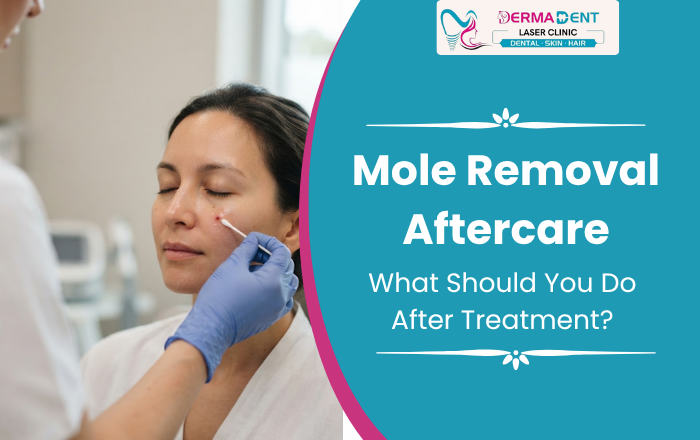
So the mole is finally gone. Maybe it was the one on your cheek that always showed up in photos, or the one near your collar that kept catching on your chain. The procedure itself probably took only a few minutes. Healing takes a little longer, and how you look after the spot over the next couple of weeks has a real say in how it finally looks.
The good news is that mole removal aftercare is mostly simple. Keep the area clean, keep it protected, and leave it alone. In this guide, we’ll go through what to expect, what to do each day, what to avoid, and when a healing wound needs a doctor to take a look.
What Happens to Your Skin Right After Mole Removal?
Right after treatment, the area is usually a small, shallow wound. A little redness, mild swelling and tenderness for a day or two are normal. Depending on the method used, you may go home with a dressing, a small crust, or a few stitches.
The method matters, because aftercare changes slightly with each one:
- Laser or radiofrequency removal: leaves a shallow wound that forms a scab. No stitches are needed. You can read more in our guide to laser mole removal procedure, cost and recovery.
- Shave removal: the mole is shaved flush with the skin, leaving a flat pink area that crusts over.
- Surgical excision: the mole is cut out and the skin is closed with stitches. This is usually done for larger or deeper moles, or ones that need to be sent for testing.
Your doctor will tell you which method was used and may give you specific instructions. Those instructions always come first. The tips below are general guidance that applies to most people.
Mole Removal Aftercare: A Step-by-Step Guide
1. Keep the Dressing On for as Long as Advised
Most doctors ask you to keep the first dressing on for 24 to 48 hours. If it gets wet, dirty or soaked with sweat before then, wash your hands and replace it gently with a clean one.
2. Clean the Area Gently Once or Twice a Day
Wondering whether you can wash your face after mole removal? In most cases, yes, after the first 24 hours. Use lukewarm water and a mild, fragrance-free cleanser. Let the water run over the spot, then pat it dry with a clean towel or tissue. Don’t rub, and skip scrubs, toners and face packs on that area for now.
3. Apply Only What Your Doctor Prescribed
A thin layer of the prescribed antibiotic ointment, or plain petroleum jelly if your doctor suggests it, keeps the wound slightly moist. Wounds that stay moist tend to heal with a softer, less noticeable mark than ones that dry out and crack.
This is not the time for home remedies. Haldi, toothpaste, lemon juice, raw aloe from the plant or essential oils can irritate an open wound and may increase the chance of infection or dark marks.
4. Leave the Scab Alone
A scab after mole removal is your skin’s natural bandage. It usually falls off on its own within 7 to 14 days. Picking or peeling it early can cause bleeding, slow down healing and leave a deeper scar or a dark patch. If it itches, a cool compress held near the area can help, or ask your doctor for something soothing.
5. Protect the Area From the Sun
New skin darkens very easily, and Indian skin is especially prone to post-inflammatory hyperpigmentation, the brown or dark mark that can stay behind after a wound heals. While the area is still healing, keep it covered with a dressing or clothing.
Once the skin has fully closed, apply a broad-spectrum sunscreen of SPF 30 or more every day for at least three to six months. If you ride a two-wheeler or spend time outdoors, a scarf, cap or helmet visor adds useful protection. Not sure which sunscreen suits your skin? This guide on choosing the right sunscreen can help.
6. Care for Your Stitches if You Have Them
Keep stitches dry for the first day or two, and avoid movements that stretch the area. Stitches on the face are usually removed in about 5 to 7 days, while those on the back, arms or legs may stay in for 10 to 14 days. Don’t try to cut or pull them out yourself.
Things to Avoid After Mole Removal
For the first one to two weeks, or until your doctor says otherwise, try to avoid:
- Swimming pools, the sea and long soaks in a tub
- Heavy workouts or activities that make you sweat a lot, especially if you have stitches
- Makeup, creams or skincare actives like retinol and acids on the healing spot
- Shaving or threading directly over the area
- Tight collars, bra straps or chains that rub against the wound
- Steam, sauna, facials and chemical peels on the treated area
- Smoking, which slows down wound healing
In Pune’s humid months, sweat can build up under a dressing quickly. If it feels damp, change it rather than leaving it on.
How Long Does Mole Removal Take to Heal?
Most small mole removals close up within 1 to 2 weeks. The pink or slightly darker mark left behind takes longer to settle, often a few weeks to a few months.
Typical Mole Removal Healing Time
Days 1 to 3
Mild redness, tenderness and slight swelling. A thin crust starts to form.
Days 4 to 14
The scab dries and gradually falls off on its own. Stitches, if any, are removed during this period.
Week 2 to Month 3
The new skin looks pink, shiny or slightly dark. With sun protection, it usually blends in more and more over time.
Your mole removal recovery can be slower on the back and legs than on the face, and in people with diabetes or those who smoke.
How to Reduce the Chance of a Scar After Mole Removal
Some mark is expected after any removal. How visible the scar after mole removal ends up being depends on the depth of the mole, its location, your skin type and how the wound is cared for. To give your skin the best chance:
- Keep the wound clean and lightly moisturised while it heals
- Don’t pick at the scab
- Use sunscreen daily on the healed skin
- Ask your doctor whether a silicone gel is suitable once the wound has fully closed
Some people, especially on the chest, shoulders and upper back, tend to form raised or thick scars. If you’ve had this before, mention it to your dermatologist before treatment.
When Should You See a Doctor After Mole Removal?
Contact your doctor if you notice any of these:
- Signs of infection, such as pain or redness that increases after the second or third day, warmth, pus, a bad smell or fever
- Bleeding that doesn’t stop after 10 to 15 minutes of firm pressure with a clean cloth
- The wound opening up or stitches coming loose
- A scar that becomes raised, itchy and keeps growing
- Colour or pigment coming back at the same spot
If your mole was sent for a biopsy, make sure you collect the report and go for the follow-up visit, even if the wound looks perfectly fine. It also helps to keep an eye on your other moles. Our guide on how to tell skin tags, moles and warts apart explains what to look for.
Frequently Asked Questions
1. Can I wash my face after mole removal?
Yes, usually after the first 24 hours. Use lukewarm water and a mild cleanser, let the water run gently over the area and pat it dry. Avoid rubbing, scrubbing or applying face packs on the wound.
2. How long does it take for the scab to fall off after mole removal?
The scab usually falls off on its own within 7 to 14 days. Smaller laser removals on the face often heal at the faster end of that range. Let it come off naturally instead of peeling it.
3. Is it normal for the skin to look pink or dark after mole removal?
Yes. New skin often looks pink, shiny or slightly darker at first. This usually fades over a few weeks to months, especially if you protect the area from the sun every day.
4. Can a mole grow back after removal?
Sometimes, if a few pigment cells remain deeper in the skin. If you see colour returning at the treated spot, don’t try to remove it at home. Show it to your dermatologist so it can be checked properly.
5. When can I apply makeup or sunscreen after mole removal?
Wait until the scab has fallen off and the skin is fully closed, usually about one to two weeks. Until then, cover the area with a dressing or clothing. After that, daily sunscreen is one of the best things you can do for the mark.
Final Takeaway
Getting a mole removed is quick. Healing well just needs a little patience. Keep the area clean, use only what your doctor recommends, leave the scab alone and protect the new skin from the sun. Most people heal without any trouble, and the mark keeps fading for a few months after.
If something doesn’t look or feel right during healing, it’s always better to get it checked early rather than wait.
Need Help With Mole Removal or Aftercare?
If you’re planning to get a mole removed, or have questions about how your skin is healing after treatment, you can consult Dr. Priyanka Tambe, Cosmetologist and Skin Specialist with 10+ years of experience, at DermaDent Laser Clinic. She can examine the mole first, suggest the right method, and guide you through aftercare. Learn more about our mole and wart removal treatment in Pune.
– DermaDent Laser Clinic, Dhankawadi, Pune
– Dr. Priyanka Tambe, Cosmetologist & Skin Specialist
Hamy Capital, 1st Floor, Sr. No. 29, Plot No. 53+54, Pune Satara Road, next to Bharati Hospital, Chaitanya Nagar, Dhankawadi, Pune, Maharashtra 411043
Phone: 70205 01024
For appointments or enquiries, you can connect on WhatsApp or find the clinic on Google.