

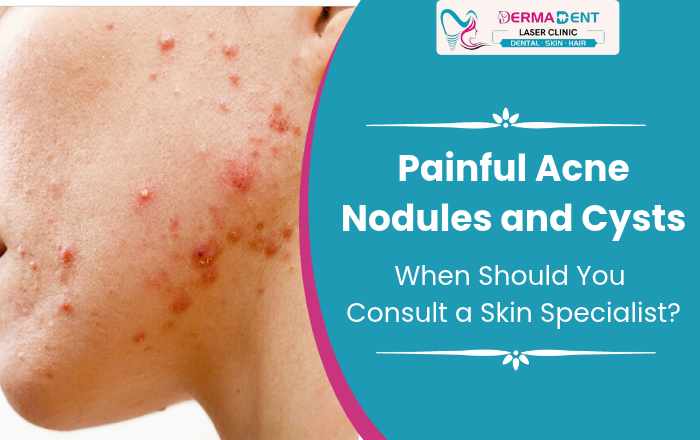
Most people have had a pimple that came to a head and went away within days. A painful acne nodule or cyst is a different experience. It sits deep under the skin, feels hard or tender, may take weeks to settle and often leaves a mark behind.
If you have been trying home remedies without much change, you may be wondering when it makes sense to see a doctor. This guide explains what acne nodules and cysts are, what you can and cannot do at home, and the signs that mean it is time to consult a skin specialist.
What Are Acne Nodules and Cysts?
Both are forms of deep, inflamed acne. They start when oil, dead skin cells and bacteria block a pore, and the inflammation spreads below the surface.
- Acne nodules: firm, painful lumps deep in the skin. They usually have no visible head and can last for weeks.
- Acne cysts: larger, softer, pus-filled lumps that can feel tender or throbbing. They are more likely to leave scars.
These lesions are often grouped under cystic acne or severe acne. They commonly appear on the cheeks, jawline, chin and back, though any oily area can be affected.
What Causes Painful Acne Nodules and Cysts?
There is rarely a single cause. Common contributors include:
- Hormonal changes: puberty, the menstrual cycle, pregnancy and conditions such as PCOS can increase oil production.
- Genetics: acne often runs in families.
- Oil and clogged pores: heavy creams, some hair oils and certain cosmetics can add to blockages.
- Picking and squeezing: this can push bacteria deeper and worsen inflammation.
- Some medicines and supplements: certain steroid or hormone-related products may trigger breakouts.
- Stress and sleep: they may not cause acne, but they can make flare-ups feel worse for some people.
Diet and acne are also being studied, and the link differs from person to person. A doctor can help you work out which factors are relevant for you.
What You Can Do at Home
Simple habits will not clear a deep nodule on their own, but they can keep the skin calm and avoid making things worse.
Do
- Wash your face twice a day with a mild, non-drying cleanser.
- Use non-comedogenic moisturisers and sunscreens, meaning products that are made not to block pores.
- Apply a warm compress for a few minutes if a lump is very tender.
- Wash pillowcases, towels and phone screens regularly.
- Use sunscreen daily, since sun exposure can darken acne marks. Our post on choosing a sunscreen that does not cause breakouts may help.
Do Not
- Do not pop, squeeze or pick at nodules and cysts. They have no head to release, and picking can lead to scarring and dark marks.
- Do not scrub hard or use harsh exfoliants. Irritation can increase redness and pain.
- Do not apply toothpaste, lemon juice, haldi or other home remedies directly on inflamed lesions.
- Do not stack many active products at once, such as several acids and retinoids together.
- Do not start leftover or borrowed prescription creams or tablets.
Over-the-counter products are generally meant for milder acne. They may not reach deep lesions, and they can irritate if overused.
Everyday Triggers People Often Overlook
Small habits can add to deep breakouts, especially along the jawline and chin:
- Friction: helmet straps, face masks and resting your chin on your hand can irritate the skin.
- Hair products: oils, serums and styling products can reach the forehead and cheeks.
- Sweat: in Pune’s warm months, wash your face after heavy sweating rather than leaving it on the skin.
- Frequent product changes: switching creams every few days makes it hard to tell what is helping or irritating.
Keeping a simple routine for a few weeks gives your doctor a clearer picture if you do book a visit.
When Should You Consult a Skin Specialist?
Consider booking a consultation if any of these apply to you:
- The lumps keep coming back, especially in the same area
- Acne is painful enough to disturb sleep, eating or daily routine
- Nothing has helped after a few weeks of consistent, gentle skincare
- Scars or dark marks are starting to form
- Acne is spreading to the chest, back or shoulders
- Breakouts began suddenly in adulthood or became worse with a new medicine
- Other signs are present, such as irregular periods or excess facial or body hair, which may need a wider medical check
- Acne is affecting your confidence or mood
Seek medical care sooner if a lesion becomes very hot, rapidly swollen, or you develop a fever, as this may point to an infection.
What Happens During a Consultation?
A consultation usually starts with questions. The doctor may ask how long the acne has lasted, which products and medicines you have tried, your menstrual and medical history, and whether you are pregnant or planning pregnancy. The skin is examined, and the type, depth and spread of lesions are noted.
Based on this, the doctor can discuss options. Depending on the case, these may include medicines applied to the skin, prescription tablets, procedures for acne or acne marks, or a plan to treat any underlying cause. The right choice depends on your skin, your history and your goals, and results differ from person to person. You can read about the clinic’s acne and acne scar treatment to see how care is approached.
Why Early Attention to Deep Acne Matters
Deep lesions damage the tissue beneath the skin more than surface pimples do. The longer inflammation continues, the greater the chance of marks and uneven texture. Seeing a doctor early does not remove the possibility of scarring, but it gives you more options to reduce further breakouts while the skin heals.
Frequently Asked Questions About Acne Nodules and Cysts
1. What is the difference between a pimple and a cyst?
A pimple is usually superficial and may come to a head. A cyst is a deeper, pus-filled lump under the skin, often more painful and slower to settle.
2. Can I drain a cystic pimple at home?
It is not advisable. Squeezing can push infection deeper and cause scarring. If a lesion is very painful, a doctor can advise a suitable approach.
3. How long does a painful acne nodule last?
It can take several weeks to settle, and some leave dark marks or scars. Timing varies by person.
4. Do I need to see a doctor for one painful lump?
A single lump that settles within a couple of weeks may not need a visit. Repeated lumps, severe pain or scarring are good reasons to book a consultation.
5. Can hormones cause cystic acne?
Hormonal changes are a common contributor, especially around the jawline and chin. If you have other symptoms such as irregular periods, mention them to your doctor.
Consult a Skin Specialist in Dhankawadi, Pune
If painful nodules or cysts keep returning, or you are concerned about scarring, you can consult Dr. Priyanka Tambe, a skin specialist (cosmetologist and trichologist), at DermaDent Laser Clinic. She can examine your skin, discuss your history and explain suitable options before any treatment begins.
Clinic: DermaDent Laser Clinic, Dhankawadi, Pune
Address: Hamy Capital, 1st Floor, Sr. No. 29, Plot No. 53+54, Pune Satara Road, next to Bharati Hospital, Chaitanya Nagar, Dhankawadi, Pune, Maharashtra 411043
Phone: +91 70205 01024
You can also contact the clinic to ask about an appointment.
This article is for general information and does not replace a medical consultation.