

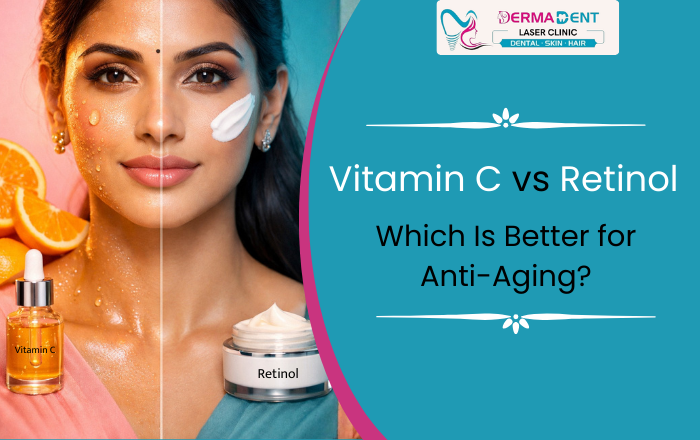
So you’ve heard about Vitamin C vs Retinol for anti-aging and now you’re wondering — which one should actually be in your skincare routine? You’re not alone. These two ingredients are everywhere, and the confusion is real. The good news? Both work. But they work differently — and knowing which one suits your skin can save you time, money, and a lot of trial and error.
Let’s break it all down in simple terms.
What Does Vitamin C Do for Your Skin?
Vitamin C for anti-aging is like a daily shield for your skin. It’s an antioxidant, which means it fights off damage caused by pollution, UV rays, and stress before it settles into your skin as fine lines or dark spots.
Here’s what it does really well:
- Brightens dull skin and gives you that natural glow
- Fades dark spots and uneven skin tone
- Boosts collagen production — and collagen is what keeps skin firm and plump
- Protects against sun damage when paired with SPF
Collagen production drops by roughly 1% every year after age 20. Vitamin C directly helps slow that process down. It’s best used in the morning, works on all skin types, and is gentle enough for beginners.
What Does Retinol Do for Your Skin?
Retinol for anti-aging goes deeper. It’s a Vitamin A derivative that speeds up your skin’s natural cell turnover — pushing fresh, new skin cells to the surface faster while fading the old, damaged ones.
It targets:
- Deep wrinkles and fine lines
- Rough, uneven skin texture
- Large pores and acne
- Stubborn age spots
Clinical studies show retinol can reduce fine lines by up to 44% after 12 weeks of consistent use. That’s a powerful number. However, it does come with an adjustment period — some redness and flaking in the first few weeks is normal. Always use it at night and never skip your SPF the next morning.
Vitamin C vs Retinol — Which One Wins?
Honestly? Neither wins alone. They’re better together — just used at different times.
| Vitamin C | Retinol | |
|---|---|---|
| Best For | Brightening, protection | Wrinkles, cell renewal |
| Use Time | Morning | Night |
| Beginner Friendly | ✅ Yes | ⚠️ Start slow |
| Results In | 4–6 weeks | 8–12 weeks |
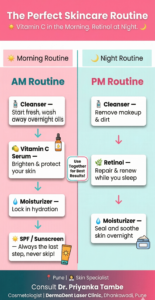
The Perfect Skincare Routine
For Dark Spots and Hyperpigmentation
Vitamin C vs Retinol for dark spots — Vitamin C is the faster option here. It blocks melanin production directly. Retinol helps too, but over a longer period through cell turnover. If pigmentation is your main concern (especially common with Indian skin tones), start with Vitamin C.
For Wrinkles and Fine Lines
Retinol for wrinkles goes deeper into the skin and stimulates collagen from within. Vitamin C prevents new damage. For visible anti-aging results, Retinol is the stronger choice.
For Skin Brightening
Vitamin C serum for skin brightening is unmatched. If dullness and an uneven tone bother you, Vitamin C will show results faster.
Can You Use Vitamin C and Retinol Together?
Yes — and this is where the real magic happens. But don’t layer them at the same time. They have different pH levels and can cause irritation when mixed directly.
The smart routine:
- Morning: Vitamin C serum → Moisturizer → SPF
- Night: Cleanser → Retinol → Moisturizer
A study found that combining antioxidants with retinoids improved anti-aging results by over 30% compared to using either alone. So using both — just separately — gives you the best of both worlds.
4 Mistakes to Avoid
- Skipping SPF — Retinol makes your skin more sensitive to the sun. No SPF means all your hard work goes to waste.
- Starting too strong — Begin with low concentrations (0.25% Retinol, 10% Vitamin C) and build up slowly.
- Layering both at once — Stick to the AM/PM split for best results.
- Quitting too early — Neither ingredient works overnight. Give it at least 8 weeks before judging.
What Results Can You Expect?
- Weeks 1–4: Skin starts adjusting; mild sensitivity with Retinol is normal
- Weeks 4–6: Brighter, more even tone from Vitamin C serum for anti-aging
- Weeks 8–12: Smoother texture, softer lines from Retinol anti-aging treatment
- 6 Months+: Firmer, healthier skin with long-term collagen support
Consistency is everything. These ingredients reward patience.
FAQ
Q: Which is better for beginners — Vitamin C or Retinol?
Vitamin C is better to start with. It’s gentler, works in the daytime, and shows results fairly quickly.
Q: At what age should I start Retinol?
Late 20s to early 30s is a good starting point — even before deep wrinkles appear.
Q: Is Vitamin C safe for daily use?
Yes. A 10–20% Vitamin C serum used every morning is safe and effective for most skin types.
Q: Which works better for Indian skin tones?
Vitamin C for hyperpigmentation is usually recommended first for melanin-rich skin. Introduce Retinol slowly to avoid irritation or darkening.
Want Real Results? Talk to a Skin Doctor.
Skincare products are a great start — but if you’re dealing with stubborn pigmentation, visible aging, or want faster, lasting results, a professional opinion makes a real difference.
We recommend consulting Dr. Priyanka Tambe, Cosmetologist at DermaDent Laser Clinic, for Skin Whitening Treatment in Dhankawadi, Pune. Whether your concern is dark spots, dull skin, or signs of aging, Dr. Tambe provides science-backed skin care treatments suited to your specific skin type and tone.
📍 DermaDent Laser Clinic | Dhankawadi, Pune
Dr. Priyanka Tambe — Cosmetologist & Skin Specialist
Book your consultation today and give your skin the care it deserves.